Reading Rummy Opponents Without Guessing Their Cards
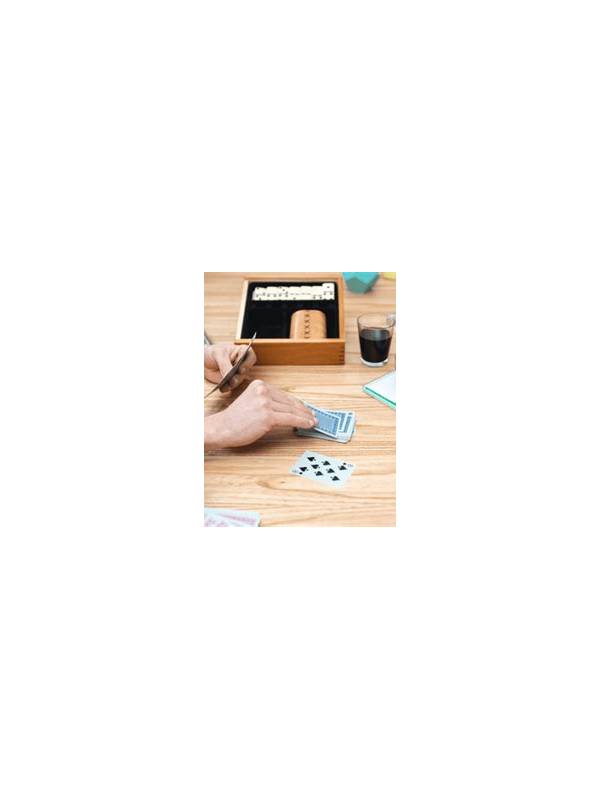
Reading an opponent in rummy does not mean trying to know the exact cards hidden in their hand. It means collecting small pieces of public information and using them to make safer decisions. Draws, discards, timing, and repeated choices can all help you estimate which cards are less useful to offer.
Start with the discard pile. If a player repeatedly ignores cards from one suit, that is a weak signal that the suit may not fit their current plan. It is not proof: they may be protecting a card, waiting for a different connection, or simply following a defensive rule. Treat the observation as a reason to compare options, not as a command.
Next, watch what they take. A card picked from the discard pile reveals more than a card drawn from a closed deck because everyone can see the choice. Note the rank and suit, then ask what nearby cards it could connect. If a seven of hearts is taken, six-eight hearts and other sevens become more relevant possibilities. Avoid assuming the player has a complete sequence; they may be collecting a pair or changing direction.
Timing can add context. A quick discard after a draw may indicate that the card was not useful, while a longer pause may reflect several possible choices. Online timing is especially noisy because of connection delays, interruptions, or interface habits. Never build a major decision on speed alone.
Keep a simple mental record of high-value discards. Face cards and tens can create larger penalties if left ungrouped, so releasing one may suggest that a player has enough flexibility elsewhere. Again, the information is incomplete. A player may be reducing points rather than building a particular meld.
The safest application is defensive. Before discarding, ask whether your card is clearly connected to something the opponent has shown interest in. If it is, choose a harmless alternative when the cost is reasonable. Do not damage your own hand merely to block a guess.
Finally, review your assumptions after the hand. Which observations were visible, and which were imagined? Separating evidence from speculation improves decision quality. Good table reading is quiet probability management: notice patterns, keep several explanations open, and make the choice that remains sound even when your read is wrong.
This approach also keeps the game enjoyable. Observation should sharpen your own choices, not encourage accusations or certainty about another player’s intentions.
Stay curious, make modest adjustments, and let several turns confirm or challenge the first impression.