Rummy Comparison: Immediate Melds Versus Flexible Holdings
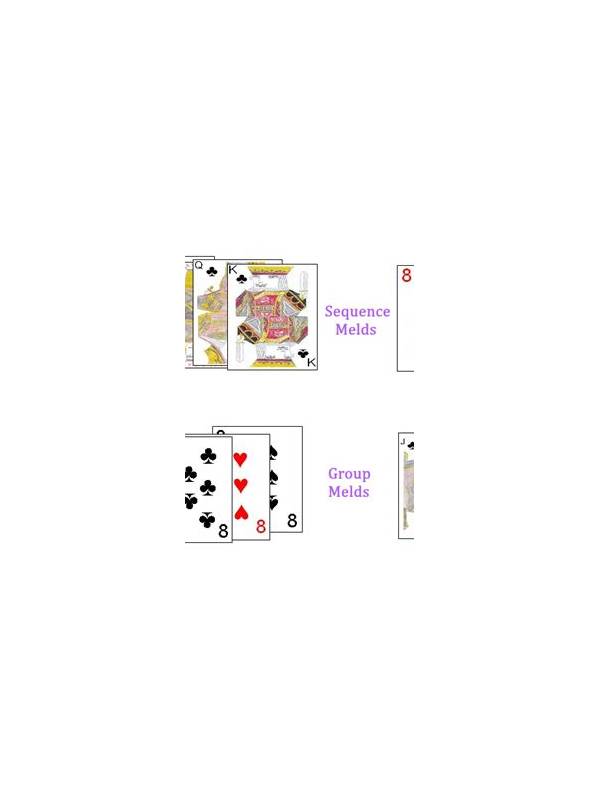
An immediate meld gives visible progress now. A flexible holding keeps more than one future route open. Comparing them requires more than asking which one looks closer to completion. You should also ask how much certainty each offers, what it costs to preserve, and how long the hand can afford to wait.
Immediate progress has several advantages. It reduces the number of loose cards, clarifies the remaining hand, and may lower the risk of being caught with expensive material. It can also simplify later decisions because one part of the hand no longer needs attention. Its limitation is that a completed group may use cards that could have supported a stronger combination, depending on the rules and scoring.
A flexible holding is valuable when its connections are real and distinct. Two adjacent cards in one suit may support several nearby completions, while a pair may support a set and a sequence. But flexibility has a carrying cost. The cards occupy hand space, and every turn without support is evidence that the holding may be less useful than it first appeared.
Compare the options with three measures. Certainty asks how much of the combination is already known. Cost asks what you must discard or keep in order to use it. Timing asks whether there are enough turns to wait for the flexible route. An immediate meld usually wins when the flexible route depends on one exact card and leaves heavy deadwood. Flexibility can win when the immediate meld would destroy several strong connections and the hand is still early.
Use a review point rather than an indefinite promise. If the flexible holding has not gained support after a set number of turns, compare it again with the best immediate alternative. This keeps “potential” from becoming an excuse to avoid making a decision.
The best choice is hand-dependent. Immediate melds reward certainty; flexible holdings reward optionality. Strong play measures both instead of treating either style as universally correct.