
Rummy Tips: Count Unfinished Groups, Not Just Melds
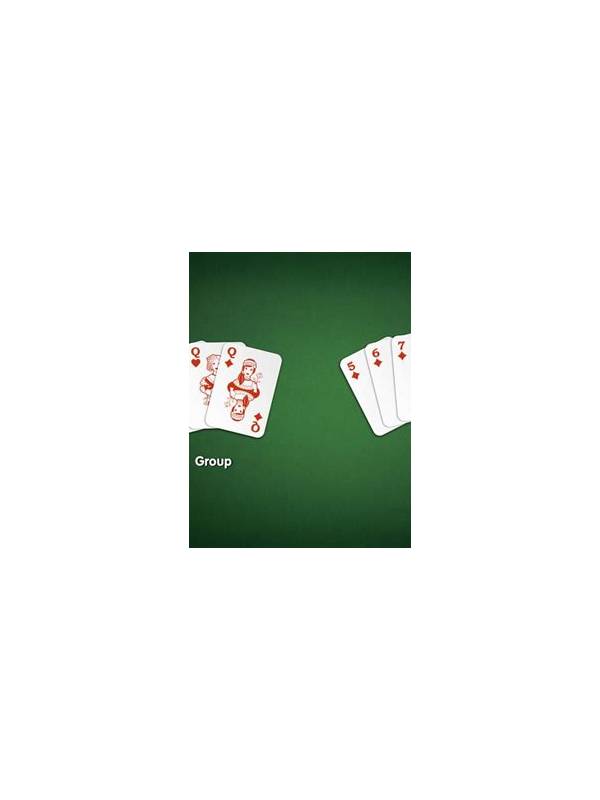
Completed melds are satisfying because they show visible progress. Yet a hand with one finished group can still be closer to completion than a hand with two if its remaining cards are well connected. Counting unfinished groups gives a more accurate view of the work left to do.
Start by listing each developing group separately. A pair, a short run, and an isolated card should not be described simply as “three cards left.” They have different completion paths. A pair may need one matching rank, while a short run may need a card on either side. An isolated card may need several unlikely events before it becomes useful.
For each group, note the number of realistic improvements and whether those improvements overlap with another group. Overlap matters because two groups that depend on the same card are not two independent chances. If both plans need the same bridge, the hand has one bottleneck, not two opportunities. Recognizing bottlenecks prevents overestimating progress.
Then consider the rules. Some formats require a pure sequence or a minimum number of groups, so an attractive set may not reduce the most important unfinished requirement. Mark the group that protects legality. It may deserve priority even if another group looks closer by appearance.
Use the count to guide your next draw and discard. If one group is nearly complete but very narrow, and another has several realistic improvements, the broader group may be the better focus early in the hand. Near the end, the narrow group may become worthwhile if its needed cards are still plausible. The count must always be combined with timing and visible information.
This method also helps during review. Instead of saying that you had “a bad hand,” record how many unfinished groups existed after each turn and which one was the bottleneck. You may discover that the problem was not the number of groups but the failure to merge, abandon, or prioritize them.
A hand is not measured only by what it has completed. It is also measured by how many independent problems remain and how realistic their solutions are. Counting unfinished groups makes that difference visible and encourages cleaner decisions.
Avoid turning the count into a rigid score. Two unfinished groups can be easier than one if both have broad completion routes, while one group can be difficult if it depends on a single card. Treat the count as an invitation to inspect quality. The most useful record combines the number of groups, their realistic outs, and the requirement each group helps satisfy.


