
Rummy How-To: Make a Route Map From a Messy Opening Hand
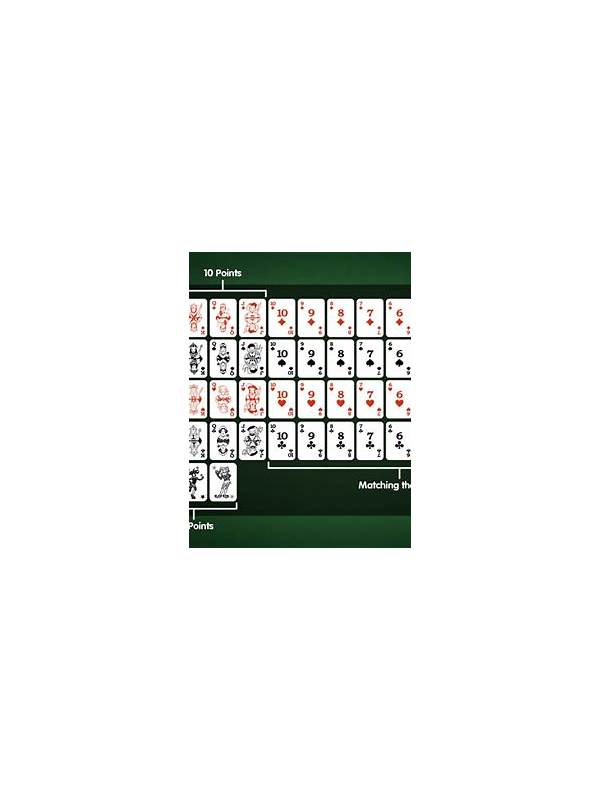
An opening hand can look difficult because every card appears to suggest a different plan. A route map helps you reduce that noise. It is not a promise about the final hand; it is a quick drawing of the few legal structures your cards could reasonably become.
Begin by sorting cards by suit and rank, then mark obvious relationships. Circle complete sequences, underline near sequences, and place equal ranks in a separate group. Do not try to optimize immediately. The first pass is only a map of what is already present. This keeps an attractive but unlikely idea from taking over before you have seen the whole hand.
On the second pass, identify the strongest route. A strong route usually has a completed pure sequence, several neighboring cards, or multiple live cards that can improve it. Label this Route A. Then identify one alternative that uses different cards where possible. Label it Route B. If all alternatives depend on the same card, note that shared dependency because it is a bottleneck, not true flexibility.
For each route, write three details: the cards still needed, the likely discard if the route fails, and the point at which you will review it. Keep the list short. A route that needs four exact cards and has no fallback is a possibility, not a working plan. A route that needs one of several connectors and leaves a manageable discard is more practical even if it looks less elegant.
Now mark cards that have no current role. These are not automatically the first discards. A card without a role may become useful after one draw, or it may be valuable because it has low penalty. Instead, give each unassigned card a review status: keep briefly, test once, or release soon. This prevents random discarding while still creating movement in the hand.
After the next draw, update the map rather than starting over emotionally. Move a card from one route to another if the new arrangement is stronger. Remove a route when its key cards become unavailable or its cost grows too high. If both routes require the same unlikely event, simplify to the route with the safer fallback.
The finished map should fit in a few words: Route A, Route B, bottleneck, and next review point. That is enough to guide a turn without making play mechanical. A route map is successful when it makes the next discard explainable and keeps you ready to change direction as new information appears.


