Rummy Hand Signals: Separate Facts From Guesses
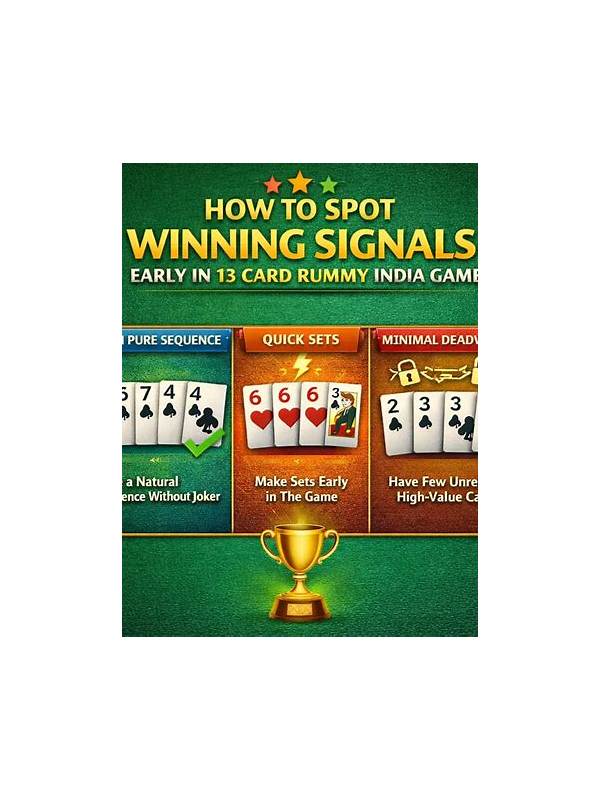
Good rummy decisions depend on information, but not all information has the same quality. Cards in your hand are facts. A visible discard is also a fact. The idea that an opponent is collecting a particular suit is a guess. Separating these categories can make your play calmer and reduce decisions based on an imagined story.
Start with your own hand. Write or say the concrete facts: “I have two connected cards,” “this set needs one rank,” or “this joker is currently covering a gap.” Avoid labels such as “this must be my best route” until you have compared alternatives. A neutral description leaves room for a better arrangement to appear after the next draw.
Next, record table evidence carefully. A card that has been discarded is no longer in that player’s hand, but it does not prove what they kept. A player taking an open-pile card shows that the card was useful enough to select. It does not reveal the entire plan. Treat visible actions as clues with limited strength, not as complete explanations.
A useful test is to ask whether another explanation fits the same evidence. If an opponent takes a seven of hearts, they might be building a sequence, completing a set, or simply choosing the least awkward option. If several related cards disappear, your confidence can increase, but it should still remain proportional to the evidence.
When choosing a discard, separate facts from forecasts. Fact: a card currently supports one possible sequence. Forecast: the exact connector will arrive soon. Fact: a high card carries a known point value under the variant. Forecast: an opponent will certainly take it. Put more weight on facts, and use forecasts only when comparing otherwise similar options.
This distinction is especially helpful after a bad draw. Instead of saying that the hand is ruined, identify what changed: one route lost a connector, one card became redundant, or the discard pile gained a useful signal. A precise description creates a precise response. Over time, keeping a short evidence-versus-assumption note after practice hands can improve judgment more reliably than remembering only whether the hand won.
Make the habit simple with two notebook columns. Put observable events on the left and interpretations on the right. At the end of a session, circle one interpretation that was supported and cross out one that was not. This gradually improves attention and humility without requiring a complicated statistics system.