Rummy Comparison: Keep an Adjacent Pair or Split It?
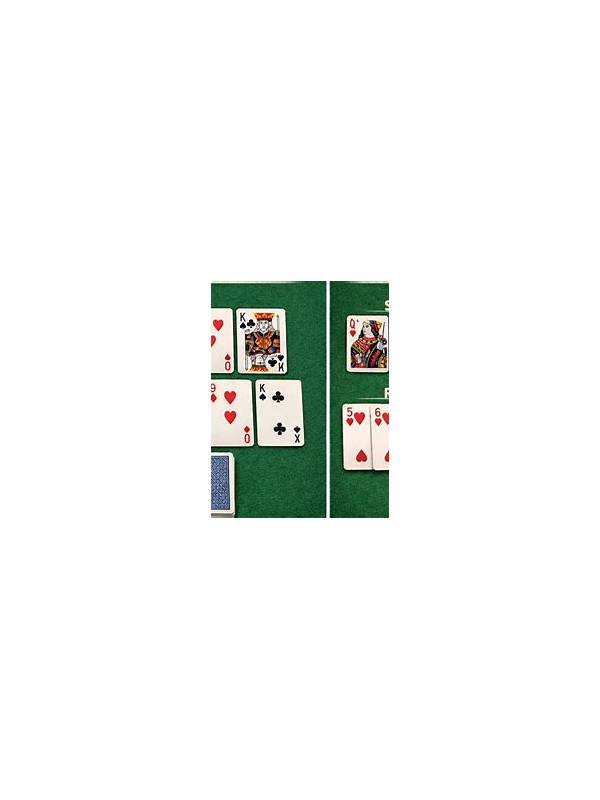
An adjacent pair often looks promising because one missing neighbor could turn it into a sequence. Yet a pair is not automatically better than two separate cards. The right choice depends on the number of useful completions, the value of the cards, and what your other groups still need.
First, identify the exact cards that would improve the pair. A middle pair may accept two neighboring ranks in the same suit, while an edge pair may accept only one. Then ask whether those cards are realistically available. A pair that needs one exact card is a narrower plan than a pair with several possible completions. Do not treat all theoretical outs as equally likely or equally valuable.
Now compare the split option. One card might join a different run, help a set, or reduce your penalty if it remains unused. The other might serve as a bridge between two groups. Splitting can also remove a high-value card from danger, but it can destroy the only foundation for a pure sequence. Look at the whole hand rather than judging the pair in isolation.
Timing matters. Early in a hand, preserving a pair may be reasonable when it costs little and offers multiple routes. Later, an unchanged pair should face an expiry test: has it received evidence, or has it merely survived because it was formed first? If the pair is blocking a completed group or holding expensive points, its emotional appeal should not outweigh its practical role.
Use a simple comparison: list the pair’s useful draws, the split cards’ best alternative jobs, and the penalty if neither plan works. Choose the option with the stronger current evidence, then review it after the next meaningful draw. The purpose is not to split every pair or preserve every pair. It is to make the trade-off visible before habit makes the decision for you.
Also consider the value of information. Keeping the pair for one more draw may teach you whether that route is alive, while splitting it may immediately simplify the hand. That extra observation has a cost: you may lose a turn or expose points while waiting. Set the trial in advance, such as “keep it until the next draw unless another group becomes clearly superior.” A stated trial rule is safer than silently extending the experiment every time the desired card fails to appear. When reviewing the choice, describe what was known at the time rather than judging from the final hand. The pair may have been reasonable to keep even if it never completed. That distinction improves selection criteria without punishing you for ordinary variance.