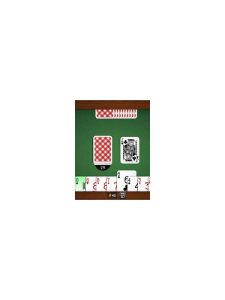
Rummy Comparison: Visible Evidence Versus Hidden Possibilities
Rummy decisions use two broad kinds of information. Open information includes discards, shown groups, table actions, and rules displayed to everyone. Private information includes your hand and the plans you are considering. Confusing these categories can lead to overconfidence, especially when a visible pattern looks more meaningful than it really is.
Open information is valuable because it can be checked by anyone at the table. If a needed card has been discarded, that fact matters. If a player takes a particular discard, it may provide a clue, but the clue is not proof of their complete plan. Treat visible actions as evidence with limits.
Private information is richer for your own hand but narrower in scope. You know exactly which cards you can combine, yet you cannot assume others see the same route. A private plan should therefore be tested against what is open: have the needed cards appeared, and does the discard history make the plan more or less plausible?
Compare the two types before a major choice. First state the private reason to keep a card. Then state the open evidence that supports or weakens that reason. If the private reason has no open support, keep a fallback. If the open evidence strongly contradicts it, lower the card’s priority even if the original plan looked elegant.
Neither category is automatically superior. A visible card can still be useful to you, and a private combination can be sound before the table reveals much. The important distinction is certainty. Open information can be verified; private interpretation remains your working model and should be revisited.
In a review, mark decisions where you treated an inference as a fact. Perhaps you assumed a discard signaled a particular sequence, or assumed an unseen card was available because no one had shown it. These are useful learning moments because they reveal how stories enter your process.
Use the comparison to support restraint. Information can improve a choice, but it cannot guarantee an outcome. Keep play within your time and spending boundaries, and protect private account or payment data. Clear categories make reasoning better without turning uncertainty into a promise.
This distinction is especially useful when reviewing a surprising loss. Ask whether the decision was based on something visible, something held privately, or an assumption connecting the two. The answer may show that the process was reasonable even though the result was poor. It may also reveal a habit of giving a table signal more certainty than it deserves. Either finding is useful when stated precisely.