Rummy Discard Timing After an Opponent Draws
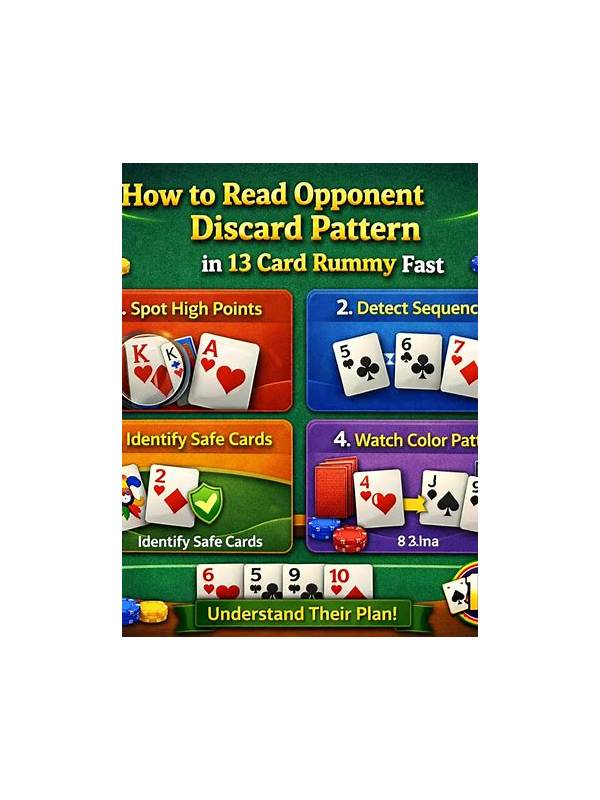
Timing can add useful context to a rummy decision, but it should never replace the cards you can actually see. When an opponent takes a card from the discard pile, the action gives you one public fact: that card was useful enough to choose at that moment. It does not reveal the complete meld they are building. A disciplined response begins by recording the fact and then returning attention to your own hand.
First, note the rank and suit that disappeared. Ask whether the card is likely to connect with adjacent cards or complete a common group. This observation can help you avoid casually discarding a nearby card on your next turn. The goal is not to block the opponent at all costs. It is to avoid donating an obvious continuation when you have an equally good alternative.
Next, examine your own candidate routes. If a card is valuable to your hand, keep it because it improves your plan, not merely because an opponent might want it. Defensive thinking becomes expensive when it makes you hold several unrelated cards. A useful limit is to identify one or two cards that are especially risky to release and let the rest be judged by your own completion needs.
Timing also matters when an opponent draws from the closed deck instead. A closed draw provides less information, so do not invent a story about it. You can still observe what they discard afterward. A quick discard may indicate that their hand had a clear choice, while a delayed action may simply reflect the interface or the player’s pace. Treat speed as weak evidence.
Try this routine: name the public fact, list the card it might affect, compare your best discard, and then release the card with the lowest value to your own plan. After the hand, review whether your decision improved your route. This keeps timing in its proper role: a small adjustment to card evaluation, not a license to guess.
A useful note is to distinguish a card taken immediately from one taken after several alternatives were visible. The first may have been a direct improvement; the second may have been chosen because the player’s original plan changed. You still cannot know the reason, but the distinction can guide how much weight you give the signal. Do not stare at one opponent so intensely that you miss your own deadline. Public information is helpful only when it supports a timely, rule-compliant choice. If the evidence is weak, return to your hand and use the simplest defensible discard.