Rummy Guide: Count Unknown Cards Without Guessing
Card counting in rummy does not require pretending that you know what another player holds. A useful count is simply a record of what is visible, what has been discarded, and what remains uncertain. This distinction keeps observation separate from imagination and makes each draw decision easier to explain.
Start with the cards already in your hand. Mark the ranks and suits that are helping a possible sequence, then note the cards that could complete or extend that structure. Next, scan the discard pile and cross out any waiting cards you can see there. If a card is visible in your own hand or in a confirmed meld, it is not an available draw. Do not cross out a card merely because it feels unlikely.
Use three labels: available, seen, and unknown. Available means the card would help and has not been observed elsewhere. Seen means you know where it is. Unknown means you have no reliable information. The unknown category is not a prediction. It is a reminder that several routes may still be open.
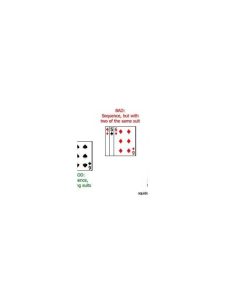
Suppose you hold the six and eight of one suit. The seven would make a useful connection, but it may be in the stock, another hand, or a discard pile. Record it as a single waiting card rather than as a promise. If you also hold a nine, the seven still matters, but the six-eight-nine arrangement may support more than one plan. Count useful outcomes, not just attractive cards.
Refresh the count after every turn. A discard can remove one route, while a new card can create two. Keep the record brief enough that it does not distract you from the table. The goal is not perfect information. It is a calmer estimate of which options remain real, which are already gone, and which should not receive more attention. For practice, pause after a few turns and rebuild the visible count from the beginning. Compare your record with the actual cards on screen. If you made an error, label its type: missed card, assumed card, or forgotten update. Each type needs a different correction. A missed card calls for slower scanning, an assumed card calls for clearer language, and a forgotten update calls for a smaller routine. Over time, the count becomes a lightweight aid rather than a second game. Stop counting when it stops helping you make a legal, affordable, and understandable decision.