Rummy Guide: Count Useful Draws Before Committing
In rummy, a combination can look promising because it has a neat shape, yet still be a poor commitment if it needs one very specific card. Counting useful draws is a practical way to test an idea before it controls your entire hand. The method is not about predicting the future or memorising every card. It is about comparing flexibility.
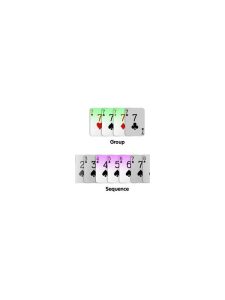
Start by naming the exact cards that would improve the group. If you hold six and seven of hearts, an open-ended run may welcome a five or an eight. If you hold seven and nine, only an eight may complete the short link. Write those possibilities mentally as a small list. A plan with two or more reasonable improvements usually deserves more attention than a plan with one narrow target.
Next, check whether the needed cards are already visible. A card in the discard pile may be available, but a card already discarded by another player may also reveal information about what they do not need. Do not assume that every unseen card is equally likely to arrive. The visible history changes the practical value of a plan.
Then compare the cost of waiting. While you keep the partial group, you may be carrying a high card, blocking a better sequence, or missing a chance to make a pure sequence elsewhere. Count the cards that would become awkward if the draw does not help. A flexible plan can still be weak when its delay has a high cost.
Use a simple three-question test: How many cards help? How many turns can I afford to wait? What is my backup use for these cards? If the answers are many, several, and clear, the plan is reasonably flexible. If they are one, one, and none, release it sooner unless the rest of the hand strongly supports it.
This approach is useful in practice games because it turns vague optimism into an observable decision. Review the choice after the hand and ask whether your estimate matched the actual alternatives. Over time, you will become better at recognising plans that are broad enough to deserve patience and narrow enough to abandon.
Keep the estimate modest. You do not need precise odds, and a useful draw may still be held by another player. The value is comparative: one plan may need four kinds of card while another needs only one. If both are incomplete, favour the one that can change shape after a miss. This protects you from treating a single attractive connection as a commitment and makes your post-round review more concrete.