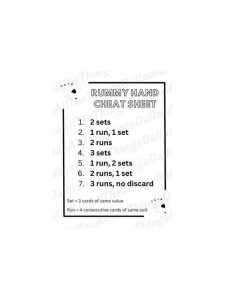
Rummy How-To: Mark the Point Where a Hand Needs Simplifying
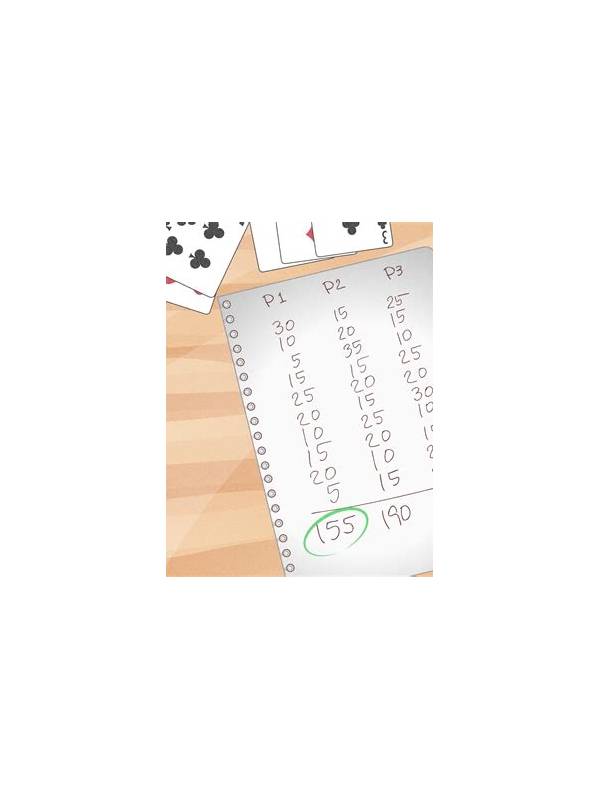
Complex hands can feel powerful because they contain many possible groups. In practice, too many possibilities can make each draw harder to evaluate and leave several cards dependent on unlikely events. A simplification point tells you when to reduce the number of active plans.
Choose the point before the hand becomes urgent. It might be after a fixed number of turns, after two missed improvements, or when the table’s discard pile becomes thin. The exact rule depends on the format and pace, but it should be observable. “When the hand feels bad” is difficult to apply consistently because emotions change the definition.
At the checkpoint, count active routes. For each route, name its needed cards, number of alternatives, and penalty if it fails. Remove the route with the narrowest completion path unless it supports a stronger group. This may mean breaking a pretty arrangement that has produced no progress. Simplification is valuable because it restores attention and makes the next discard easier to justify.
Protect one flexible reserve while simplifying. Do not throw away every card that lacks an immediate group; keep a card that can join more than one possible sequence or set. The reserve prevents the simplified hand from becoming completely dependent on the next exact draw. It is a small insurance policy, not another full plan.
Recheck after the next meaningful card. If the simplified route improves, continue with it. If it does not, use the same criteria again rather than adding another speculative route. This prevents the hand from expanding back into a collection of hopes.
The point of simplification is not to make a hand look tidy for its own sake. It is to lower the number of simultaneous assumptions. Fewer assumptions make table information easier to interpret, reduce emotional attachment to discarded ideas, and leave you better prepared for an unexpected draw. A clear hand is easier to play than an ambitious hand whose routes cannot all be supported.
Signal the checkpoint with a physical habit, such as placing uncertain cards in a separate row while comparing them. Once the choice is made, return the hand to one clean arrangement. The visual reset reinforces that the old possibilities have been evaluated and prevents them from quietly returning.