Rummy How-To: Separate Result Review From Decision Review
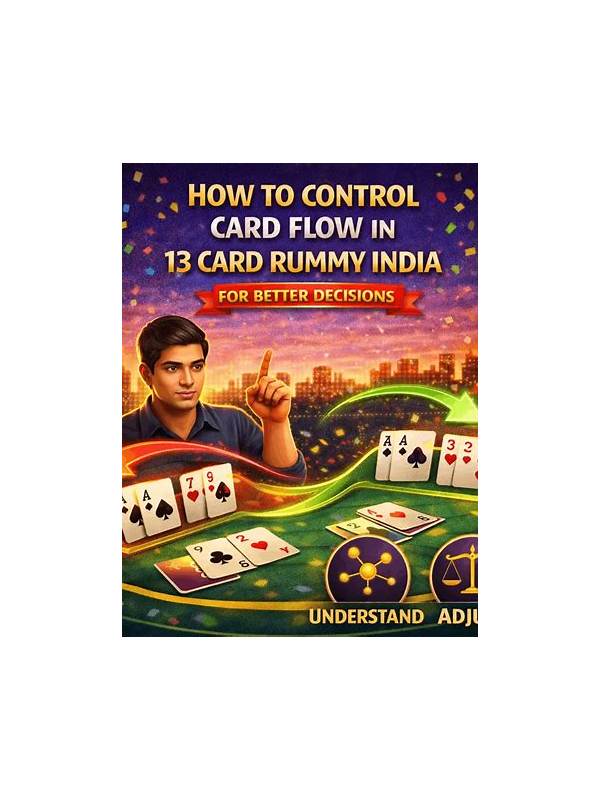
Reviewing a completed rummy hand can improve future decisions, but only if the review separates choices from outcomes. A lucky draw does not prove a plan was good, and an unlucky result does not prove it was bad. Use a short, neutral process while the sequence of turns is still familiar.
Reconstruct the starting position first. Identify the strongest initial group, the weakest card, and the main uncertainty. Avoid judging the opening by the final result. Ask what information was actually available at the time, not what became obvious later. This prevents hindsight from making every alternative look easy.
Next, mark the turning point. It may be a discarded connector, a new pair, a missed declaration check, or a decision to continue after the plan became narrow. Describe the event without adjectives. “The route lost two visible outs” is more useful than “the hand collapsed.” Then record the action taken and the reason you remember.
Evaluate the reasoning. Did you compare alternatives? Did you account for penalty and flexibility? Did you set a review deadline? If the answer is yes, a poor result may simply be variance. If the answer is no, choose one process adjustment rather than trying to redesign your entire strategy.
End with one practice question. Examples include “What makes a route narrow?” or “Which cards should I compare before discarding?” Keep the question specific enough to test in the next session. A good review leaves you with clearer habits, not shame or a promise to chase the result. Stop reviewing when you have one actionable lesson.
If you have a record of the hand, mark decisions before revealing what later happened. This preserves the information available at each moment. If you do not have a record, reconstruct only the major turning points and acknowledge uncertainty. A review that invents exact motives or probabilities is less useful than an honest partial account.
Separate technical mistakes from safety mistakes. A missed connection may be a practice issue; exceeding a financial or time limit is a boundary issue that deserves immediate attention. Both can be addressed, but they require different responses. Improvement in play should never be used to excuse unsafe behaviour.
The final review question can be written as a single sentence: “What will I notice earlier next time?” That wording turns the review toward prevention. It may lead to a deadline for a narrow route, a declaration checklist, or an earlier break. Keep the answer practical enough to remember.