
Rummy Tips: Decide When a Connector Has Earned Its Place
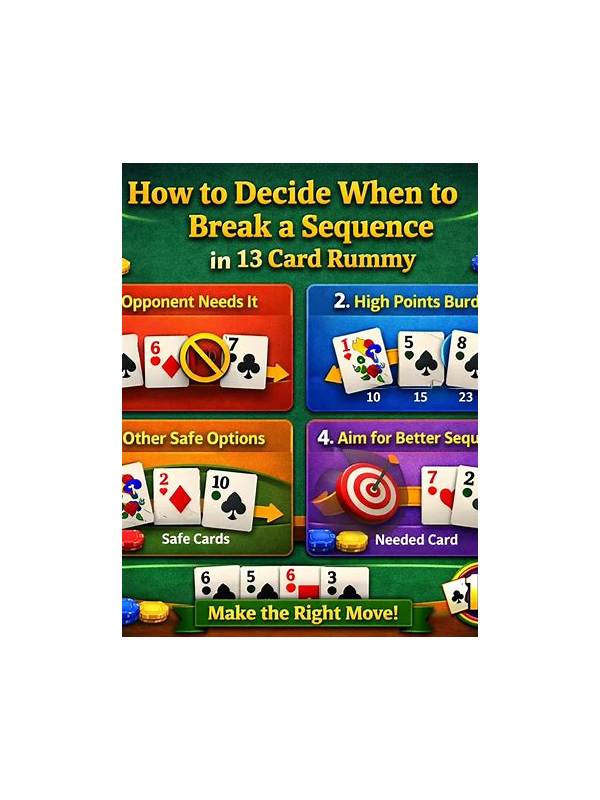
A connector can make a hand look promising because it sits between two useful ranks. Yet not every connector deserves a permanent place. Its value depends on the routes it supports, how quickly those routes could improve, and what you give up by holding it. A simple evaluation keeps hope from becoming a strategy.
Start by writing the exact combinations the card could join. A middle card may support a run on either side, while an edge card may have only one direction. Do not count a route merely because it is technically possible. If the route needs two specific cards, or if it would leave another valuable card stranded, mark it as narrow. Broad and stable routes deserve more weight than attractive but unlikely patterns.
Next examine the cards around the connector. A connector paired with a neighbor is stronger than a completely isolated connector, because one draw could create a concrete group. If both neighbors are absent, ask whether the rest of your hand gives you another reason to wait. Holding one flexible card can be sensible; holding several cards that all need separate miracles creates hidden congestion.
Set a review point before the next draw. If the card does not gain a partner or become part of a clearer route by that point, reconsider it. The review point is not a prediction that the card will fail. It is protection against keeping it simply because you have already invested turns in it. A plan that can be reconsidered is easier to manage than an unspoken commitment.
Compare the connector with the best available discard. Ask which choice leaves fewer expensive loose cards, more realistic routes, and a clearer next action. If discarding the connector removes the only bridge between two useful cards, it may still be worth protecting. If another card can preserve the same route while reducing point exposure, the connector may have earned its exit.
Finally, record the reason for your decision in one sentence. “Held because it completed two broad routes and had a paired neighbor” is specific. “Held because it felt useful” is not. Repeating this review will teach you which connectors genuinely improve your hands and which ones only create the feeling of progress.
The review also helps with timing. A connector that was valuable early may become less useful after several matching cards appear elsewhere. Reassess the current hand, rather than defending an earlier evaluation simply because it once made sense.


