Rummy Turn Planning for Players Who Draw Slowly
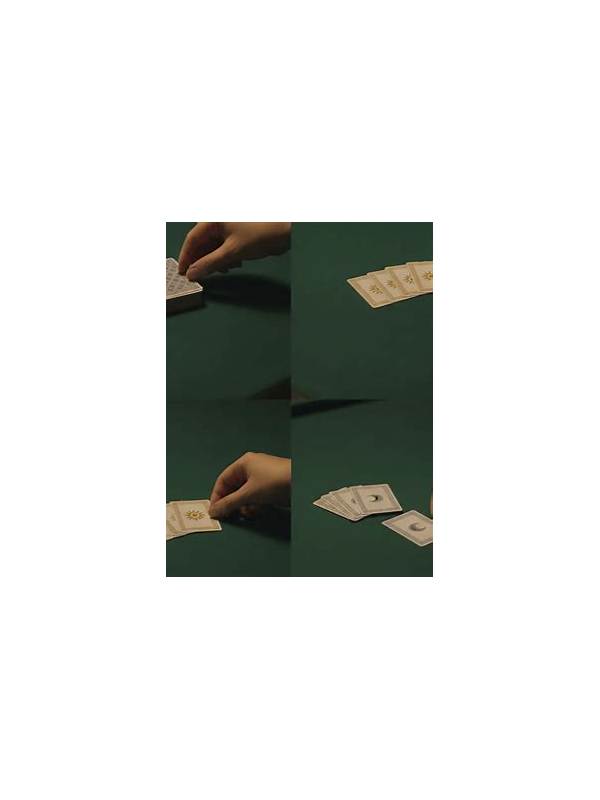
Fast tables can make a player feel that every draw must be followed by an instant answer. A better approach is to prepare a small sequence of checks that fits inside the turn. Planning does not mean hesitating; it means deciding in a repeatable order.
Before the next card arrives, know which part of your hand is weakest. Is it a high-point singleton, a broken sequence, or a pair with no useful third card? Naming the weakest part gives the draw a purpose. You are not waiting for “anything good”; you are looking for cards that improve a particular problem.
When you draw, pause long enough to compare the new card with your current plan. Ask whether it creates a pure sequence, extends a possible sequence, forms a set, or merely duplicates a card you already have. Then identify what the new card makes less useful. A draw should change the hand’s priority only when it improves the complete arrangement, not because it is a familiar rank.
Use a two-option rule. Select the best complete layout you can see and one backup layout. If the new card supports neither, discard the least flexible high-risk card. This keeps the number of choices manageable. Trying to calculate every theoretical combination can be slower and less accurate than comparing two sensible plans.
Your discard should be selected after the draw, not before it. A planned discard is useful as a starting point, but new information can make another card safer. Check whether the discard would break a pure sequence, remove a bridge card, or release a card that an opponent may be collecting. If two cards are similar, prefer the one with higher points or fewer possible connections.
Finally, update your target after each turn. You may begin by seeking a sequence in one suit, then switch when a second suit offers a nearly complete pure sequence. This is not inconsistency; it is adaptation. A simple turn plan—identify the weakness, evaluate the draw, compare two layouts, and discard deliberately—keeps slow thinking useful even at a quick table.
You can rehearse the routine away from a live table. Deal a sample hand, give yourself a short decision window, and say the four checks aloud. Practice should focus on clarity rather than speed. Once the sequence becomes familiar, the same steps will fit naturally into a real turn without making you feel hurried.
Keep notes brief.