Reading a Rummy Discard Without Guessing Too Much
The discard pile can reveal patterns, but it cannot show a player’s full hand. A disciplined reader collects small clues and keeps alternative explanations open. This prevents one visible discard from turning into an overconfident strategy.
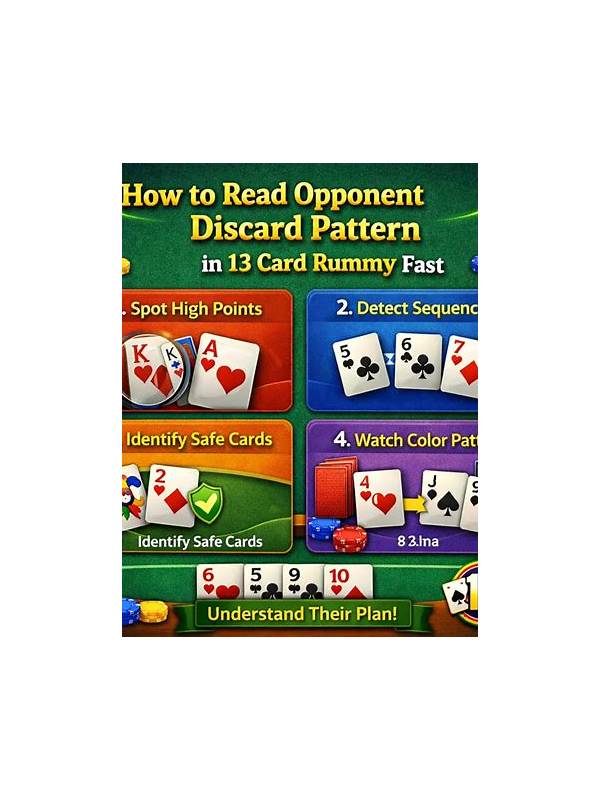
Begin with the most recent cards. A player who takes from the discard pile has chosen that card openly, so it may be more informative than a card they draw from the closed pile. Even then, the card could complete a set, extend a sequence, or simply be selected because it is safer than the unknown alternative. Treat the action as a clue, not a declaration of intent.
Track repeated ranks and suits over several turns. If a player repeatedly avoids cards from one suit, that may suggest a different structure, but it could also reflect the cards available. Avoid assuming that a discarded card is unwanted forever. A player may break an earlier plan after receiving a better card.
Use discard reading to protect your own choices. If a card appears likely to help an opponent, consider another discard with similar point value and fewer connections. This is most useful when two cards are equally weak in your hand. It is rarely wise to damage a nearly complete sequence merely to deny a speculative card.
Do not let observation replace hand evaluation. Your first responsibility is to create a valid arrangement. If you spend too much attention predicting opponents, you may keep a high-value singleton or miss a pure sequence. Check your hand, then use the pile as a secondary source of information.
When a player’s actions seem inconsistent, accept uncertainty. They may be experimenting, protecting a card, or still sorting their hand. The safest conclusion is often limited: “This card may be useful to them.” That is enough to influence a close discard decision without inventing a complete story.
Good discard reading is modest, current, and connected to action. Watch what was taken, note what was repeatedly rejected, compare your alternatives, and update the picture after every turn. Evidence can improve a decision; it should not create confidence that the cards do not support.
One practical note is to review only the information still relevant to the current turn. Old discards can become less useful as the hand changes, and a player may have abandoned an earlier plan. Keep observations short, such as “this card may help them,” rather than building a detailed theory. That keeps your attention available for your own sequence and declaration checks.
Simple evidence is better than elaborate speculation.