
Rummy Comparison: Immediate Melds Versus Hidden Structure
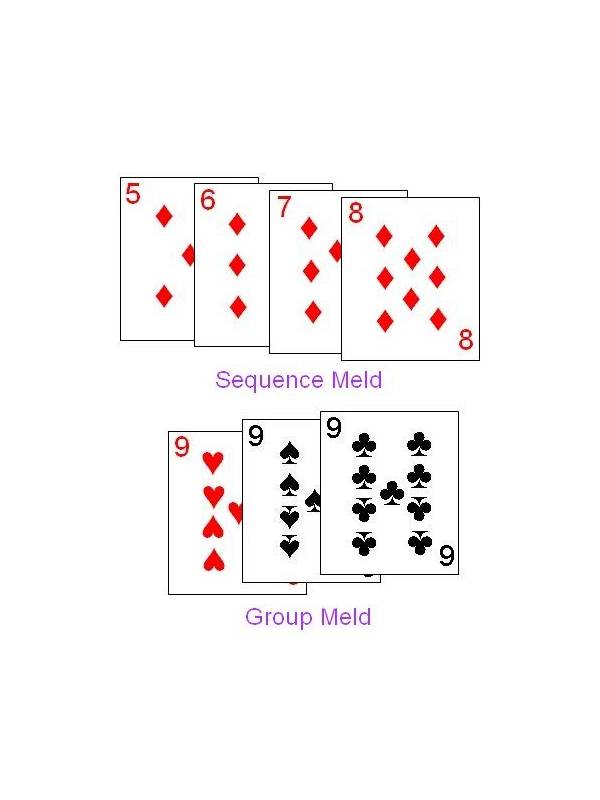
An immediate meld is a group that can be organized or completed now. Hidden structure is a set of relationships that has not yet become a finished group but may support several future routes. Comparing these ideas helps explain why a hand with visible groups is not always safer than a hand with flexible connections.
Immediate melds are easy to evaluate. They reduce loose cards, clarify the remaining hand, and often lower the chance of accidentally counting one card twice. They are especially useful when the declaration requirements are clear and the end of the hand is approaching. A completed group also makes later decisions faster because fewer cards need interpretation.
Hidden structure has a different advantage. A connected pair may fit into more than one sequence, or a rank pair may become part of a set without blocking a suited route. Holding such structure can preserve options while you gather information. The danger is that imagined structure can occupy space without producing a realistic plan. If several routes depend on the same unseen card, the flexibility may be mostly theoretical.
Use timing to choose between them. Early in a hand, hidden structure can deserve room when its points are modest and its routes are independent. In the middle game, compare its improvement path with the certainty of an available meld. Near the end, an immediate group usually gains value because it reduces the number of unresolved requirements. Never sacrifice a clear legal group merely to preserve an attractive possibility without a deadline.
The comparison is also affected by your hand’s shape. If one immediate meld leaves several expensive singles, it may not solve the real problem. If a hidden pair connects two low-cost routes and the rest of the hand is stable, waiting may be reasonable. Ask which choice improves the whole hand, not just the most visible group. A useful rule is to prefer immediate structure when it reduces risk, and hidden structure when it creates independent, time-appropriate options. Reassess after every important draw.
One practical compromise is to secure the clearest group while retaining only one hidden route. Give that route a specific expiry point and identify the card to release if it does not improve. This keeps the hand readable and makes later reviews fairer because you can see whether the hidden route earned the space it occupied. For a useful review, describe the decision in neutral terms. State the cards you could see, the route you preferred, the cost of keeping it, and the point at which you would change direction. This keeps the lesson tied to available information rather than hindsight. It also makes the habit easier to repeat in a later session. A short, specific explanation is usually more valuable than a long account of the final result.


